Where Biology Meets Brushstrokes
Co-taught classes combine unexpected fields—like art and science, or fashion and philosophy—to reveal deeper truths.
By Kristen Paulson-Nguyen
— Dr. Larry McKenna, Professor
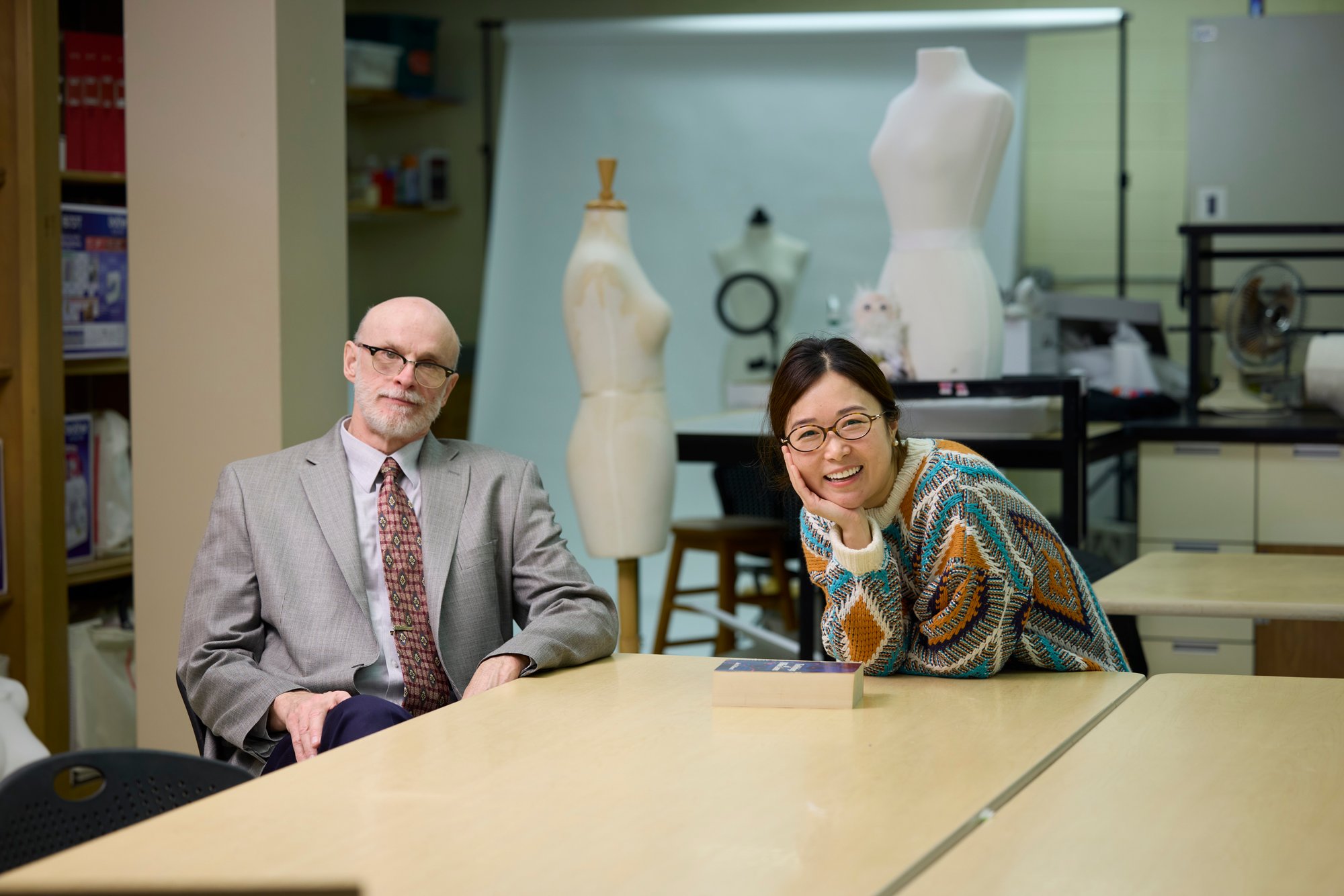
Philosophy Professor Joseph D’Andrea, left, and Fashion Design and Retailing Professor Ruirui Zhang co-teach a called Reimagining Fashion Through Philosophy.
What do astronomy and Shakespeare have in common? Shakespeare was writing 50 years after Renaissance astronomer Nicolaus Copernicus theorized an Earth-centered model for the universe. His plays tell us of how this scientific revolution percolated through literature and into the mind of the average person.
Co-teaching occurs when two or more professors collaborate to design and lead a single course. Often bringing perspectives from different disciplines, they create a learning experience that’s more dynamic and interconnected than either could offer alone. The result is greater than the sum of its parts—revealing unexpected connections and transforming how students think, question and engage with the material.
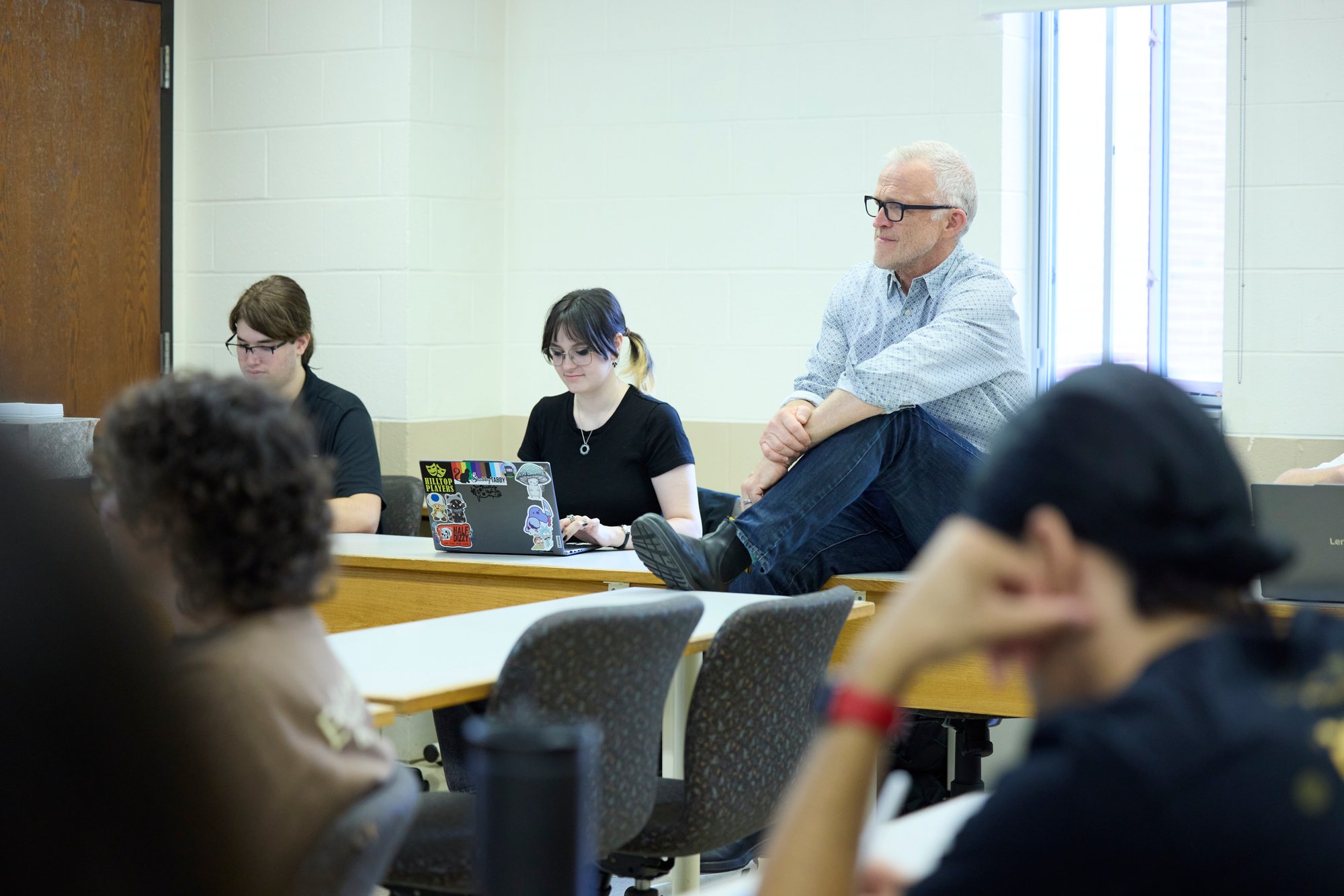
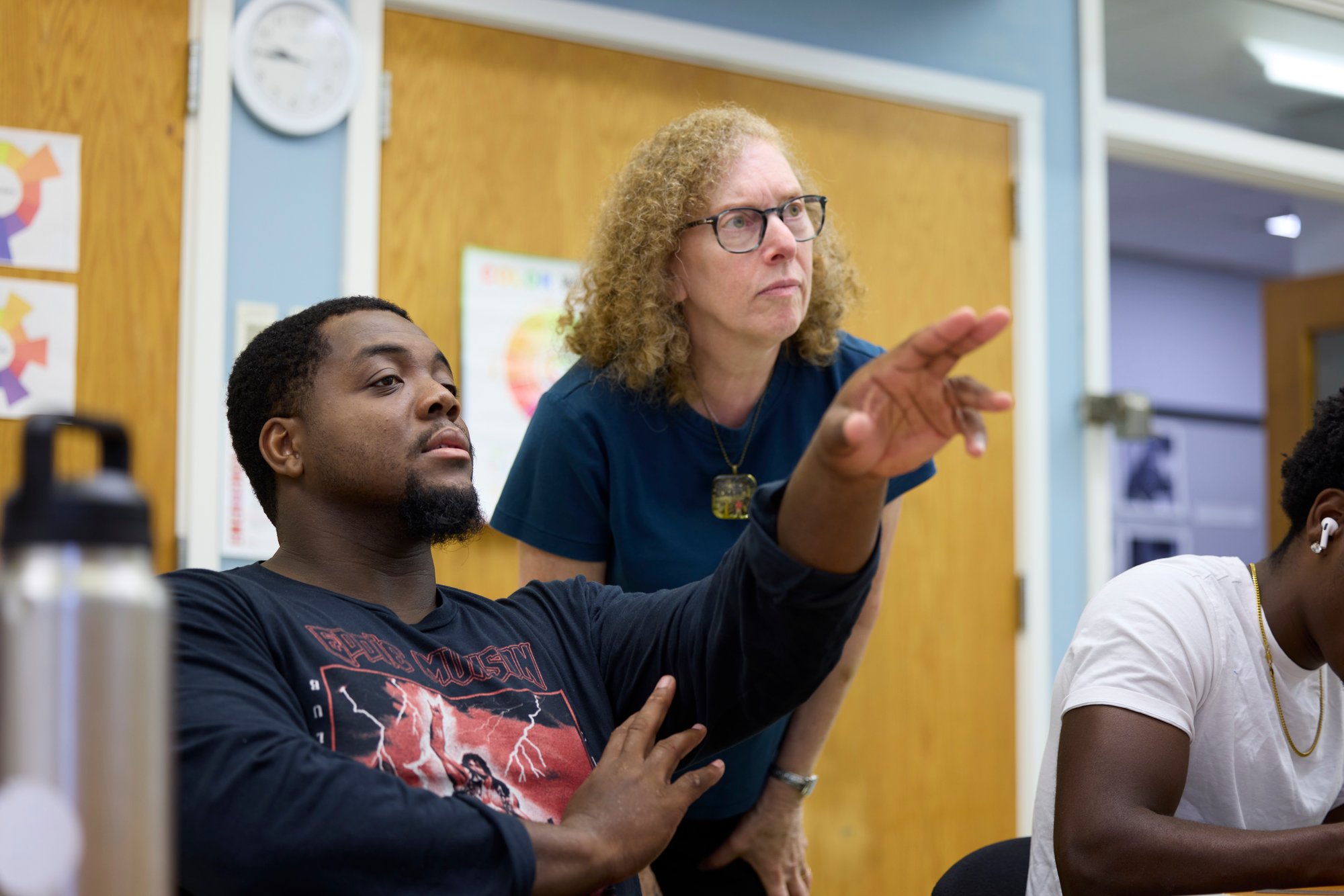
Professor Larry McKenna takes in a lecture from his colleague and co-teaching partner Professor Judith Otto.
“For me, the thrill of co-teaching is seeing the universe through a completely different lens,” says Dr. Larry McKenna. “Co-teaching enriches students and back-feeds the faculty.”
McKenna, Dr. Judith Otto and Dr. Joyce Wang, all professors in the Department of Environment, Society and Sustainability, co-teach the Communication for Environmental and GIS Professionals (Thesis I) capstone for the department.
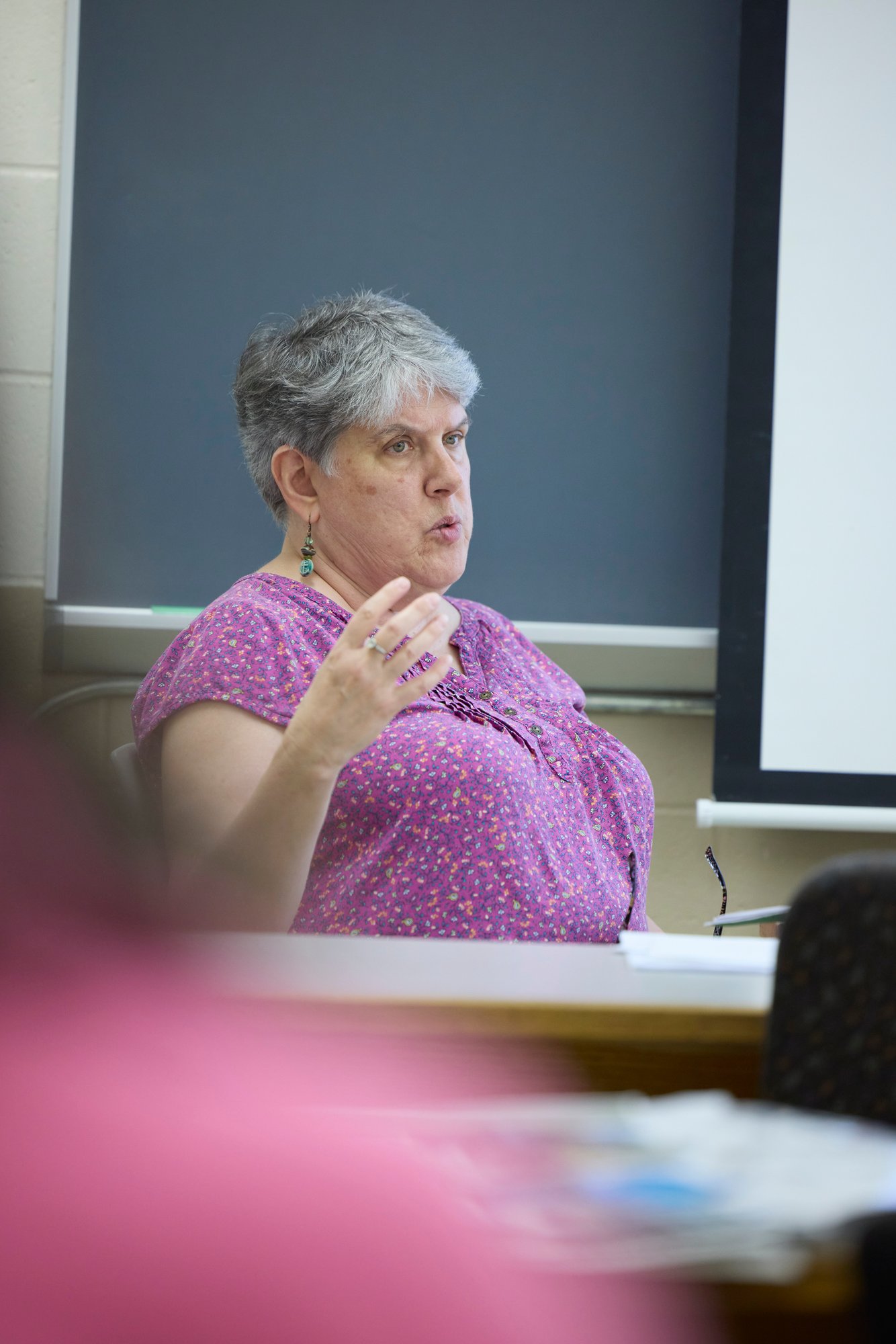
Otto glances at her notes as she reviews environmental policy. When it’s McKenna’s turn to lead, he fills the board with a sketch summarizing the cyclic nature of research design. Chalk dusts his shirt as he finishes the graphic with the words, “students, dizzy” in the center, to the relieved, if nervous, laughter of students.
— Amy Bickford ’26, Student
Otto riffs on his lecture. McKenna trusts her to extend the learning in a different direction than he would have gone. Within their differences lies the alchemy of co-teaching: the exposure to Otto’s and McKenna’s perspectives trains students to talk science to policymakers and policy to scientists. The need for environmental policy reform must be conveyed to local and federal officials, who may have little science background, in terms that are accessible and easy to analyze. “Now I know how to carry information to the people in power,” says Amy Bickford ’26, an Environmental Science and Policy major.
In addition to acquiring skills specific to their field, receiving the pair’s varied feedback prepares students for the rigors of professional life. “It’s as if they are working with two different managers who approach things in disparate ways,” says Otto. “Students will receive feedback from future colleagues and supervisors that may not align.”
McKenna points out the value of academic constraints. “Students need to balance their discussion of policy and science, meet a word count and do a great job on both,” he says. “Succeeding under these conditions maximizes their chances of employers noticing them.”
Faculty also develop fresh areas of expertise. “Judy constantly brings up new policy examples,” says McKenna. “It gives me a rich background to talk about.”
Professor of Philosophy Joe D’Andrea and Professor of Fashion Design and Retailing Ruirui Zhang created the course Reimagining Fashion Through Philosophy. It investigates the fashion industry’s problems from the perspective of French Algerian philosopher Jacques Derrida, among many others. Derrida believed that the meaning of a text wasn’t fixed.
Students also learn about the American philosopher Judith Butler, who argues that gender is a social performance. “We use fashion to think about being with each other in the world,” says D’Andrea. “This course is a place for students to develop their creative problem-solving skills and to think more critically and deeply about the world,” adds Zhang.
— Ariel Konopka ’28, Student
To explain Hegel’s Master-Slave dialectic, Zhang discusses scenes from the movie The Dark Knight (2008). They illustrate the mutual dependence of Batman and the Joker, even though one appears to dominate the other. “Ruirui comes up with examples that speak particularly well to students,” says D’Andrea.
As Zhang leads, she is grateful to see D’Andrea raise his hand with a question. “As a co-teacher who has never taught a philosophy course, I feel confident,” says Zhang, “because Joe supports my teaching of abstract thinking and concepts.” D’Andrea knew “very little about fashion” before working with Zhang.
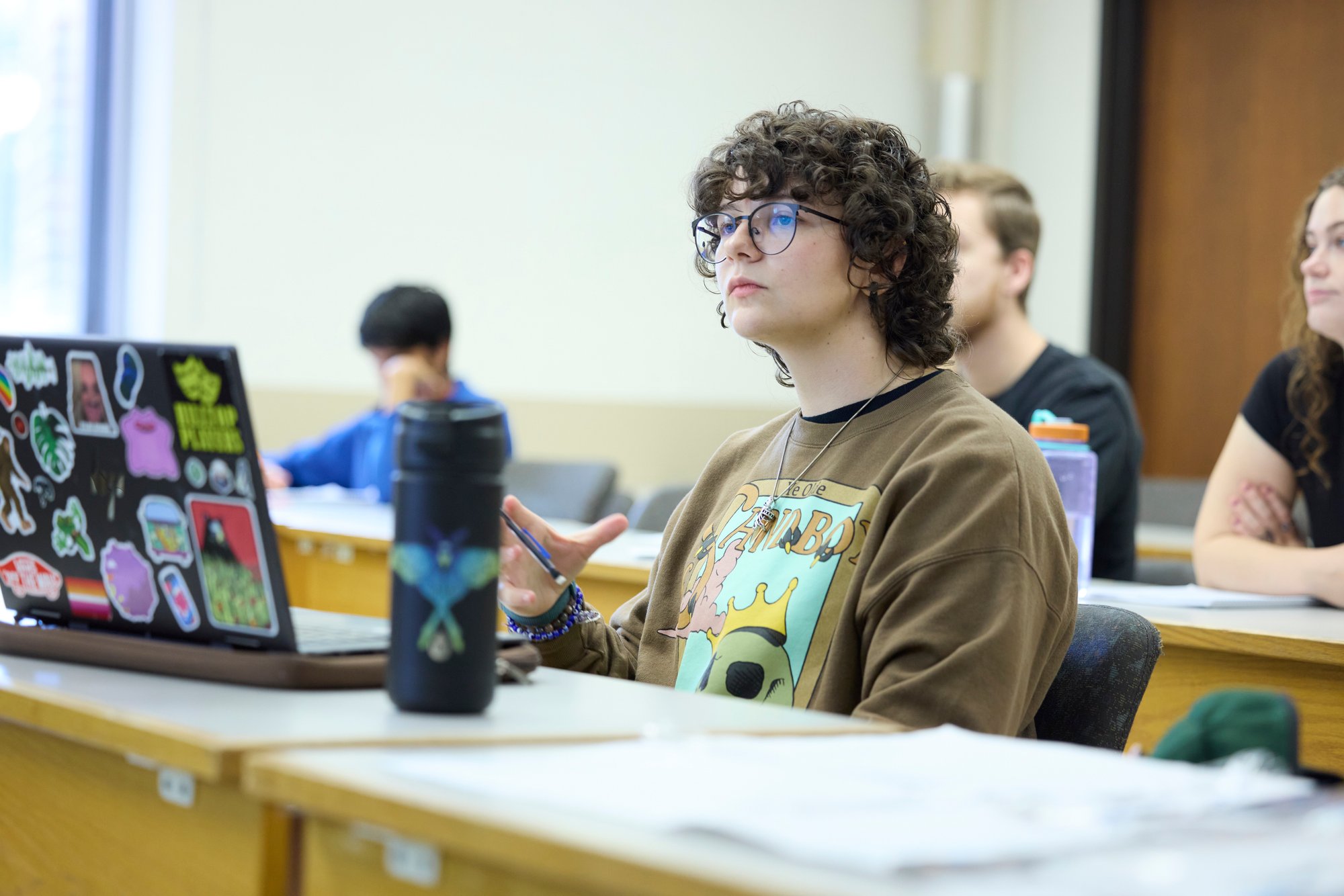
The pair engages Ariel Konopka ’28 more than a single instructor might. “Instead of getting a two-hour lecture, I am part of a conversation that makes sense of the material,” says Konopka. She is privy to Zhang’s insights about Chinese uniforms, seen through the lens of communism and Zhang’s Chinese cultural background; D’Andrea’s stories of living in Lesotho give Konopka a way to understand South African culture. “That’s the beauty of Reimagining Fashion Through Philosophy. The world is so complicated—even when we talk about fashion,” she says.
Philosophy and her major, Math, aren’t so different, Konopka is learning. Philosophy asks: How do we know what we know? Math asks: What counts as proof and as truth? She decided to minor in Philosophy. “D’Andrea and Zhang are great teachers,” says Konopka. “This course helped me decide what I wanted.”
When Yumi Park, professor of art history, saw a three-dimensional model of DNA in Professor of Biology Cara Pina’s office, she shrieked with excitement. Park and Pina teach Biological Science Portrayed in Visual Language.
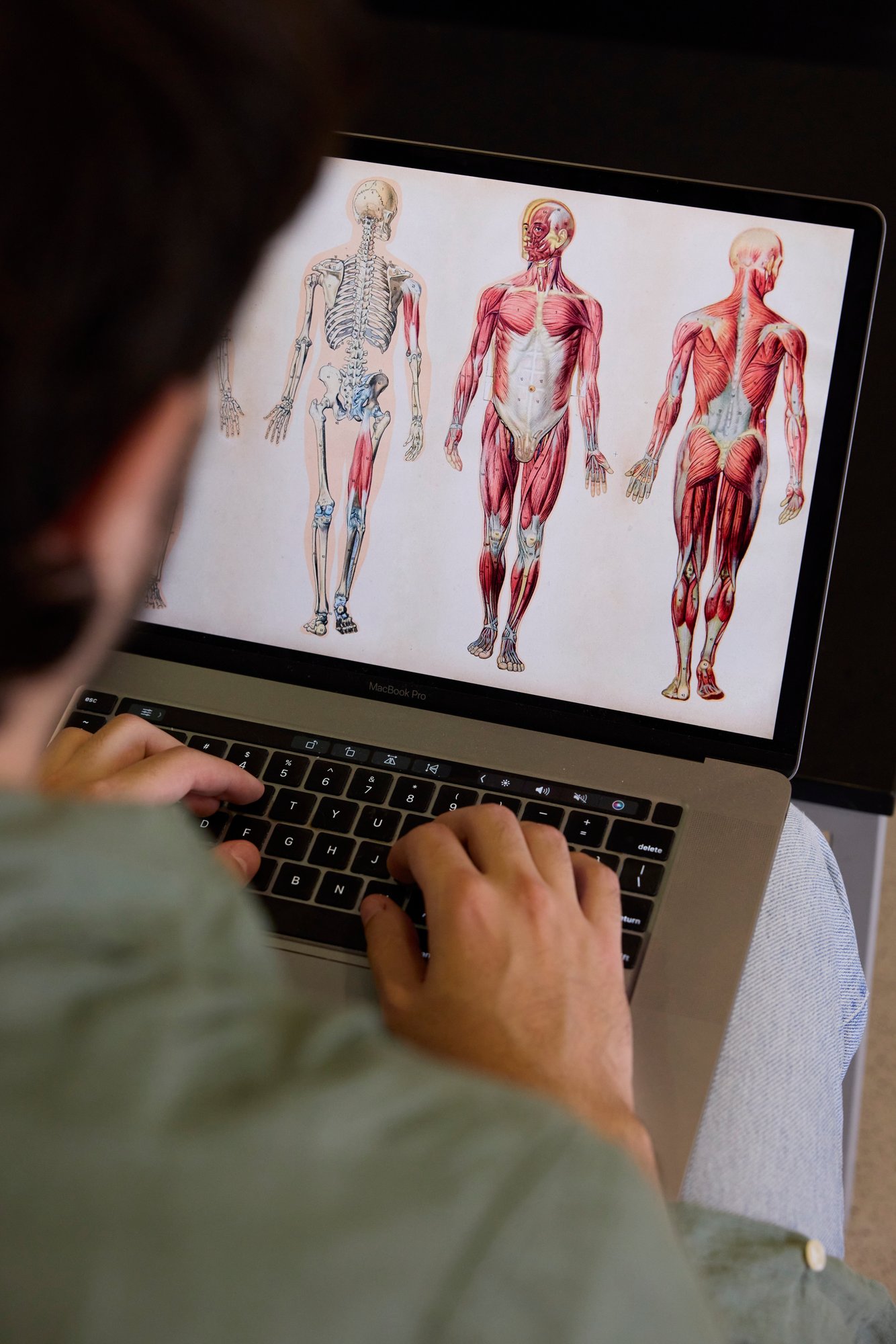
The pair’s energy is infectious as they demonstrate how, over centuries, art has illustrated biological processes such as infectious diseases. Pina processes information slowly, while Park charges ahead. After Pina explains what type of microbes caused the Black Plague, Park talks about the paintings created after it ended. She explains how these paintings reflect the psychological trauma caused by losing half the population.
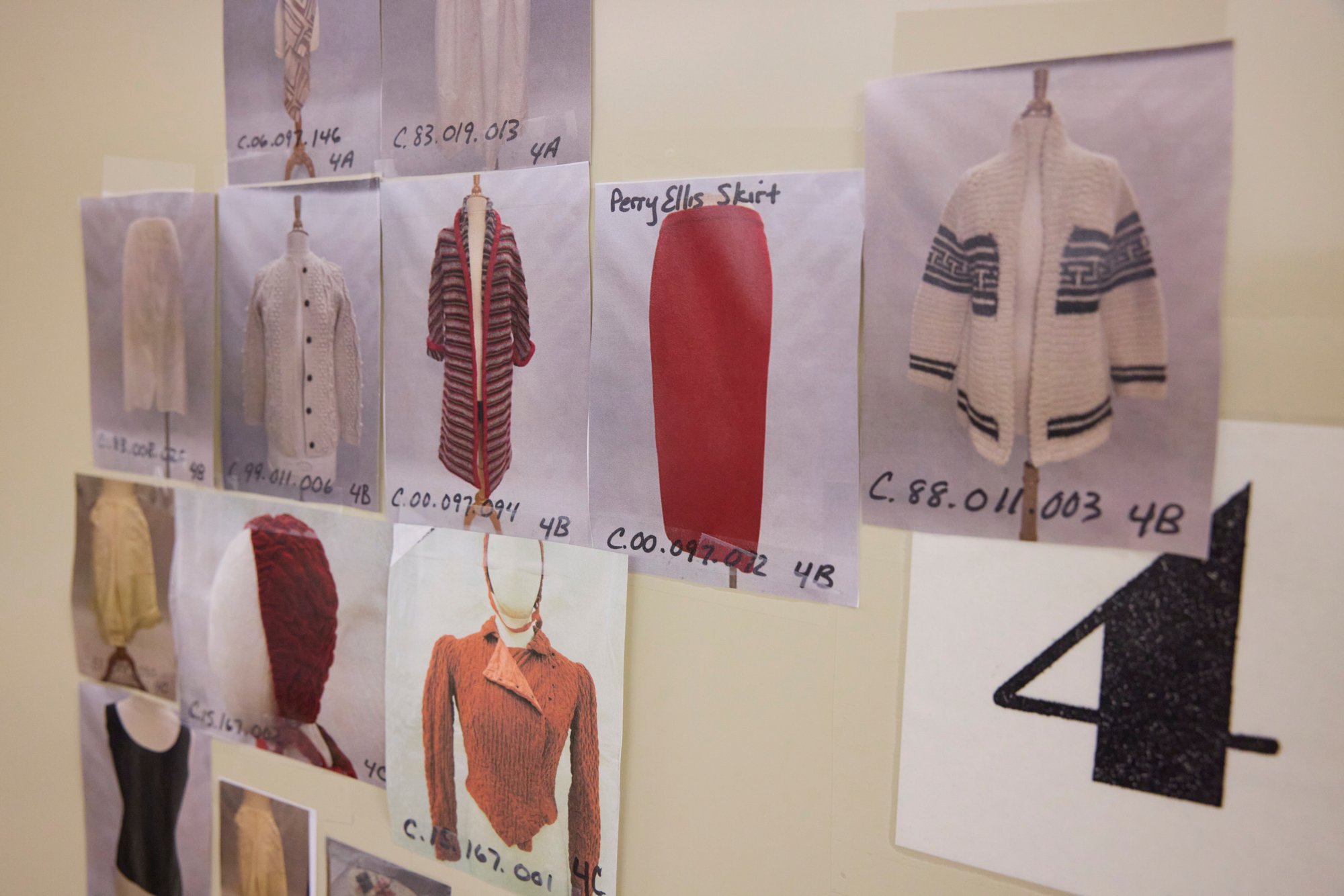
Images of garments hung in the apparel studio.
“I am a student when Cara gives a lecture,” says Park. “By listening, I get more stimulated to teach my topic in a much better way. If I add knowledge from Cara, I can explain art in depth and engage with it more deeply.” For the course’s Science majors, the mix of art and science “fosters their ability to come up with alternative hypotheses, to think: ‘What might I be missing?’” says Pina.
Park brought in African masks and encouraged students to touch them. “I wasn’t just sitting in a lecture,” says Sara Abbasova ’25. “The course was a total experience for my senses.” As she learned about biological illustrators, Abbasova thought for the first time about the artists who illustrate textbooks.
— Yumi Park, Professor
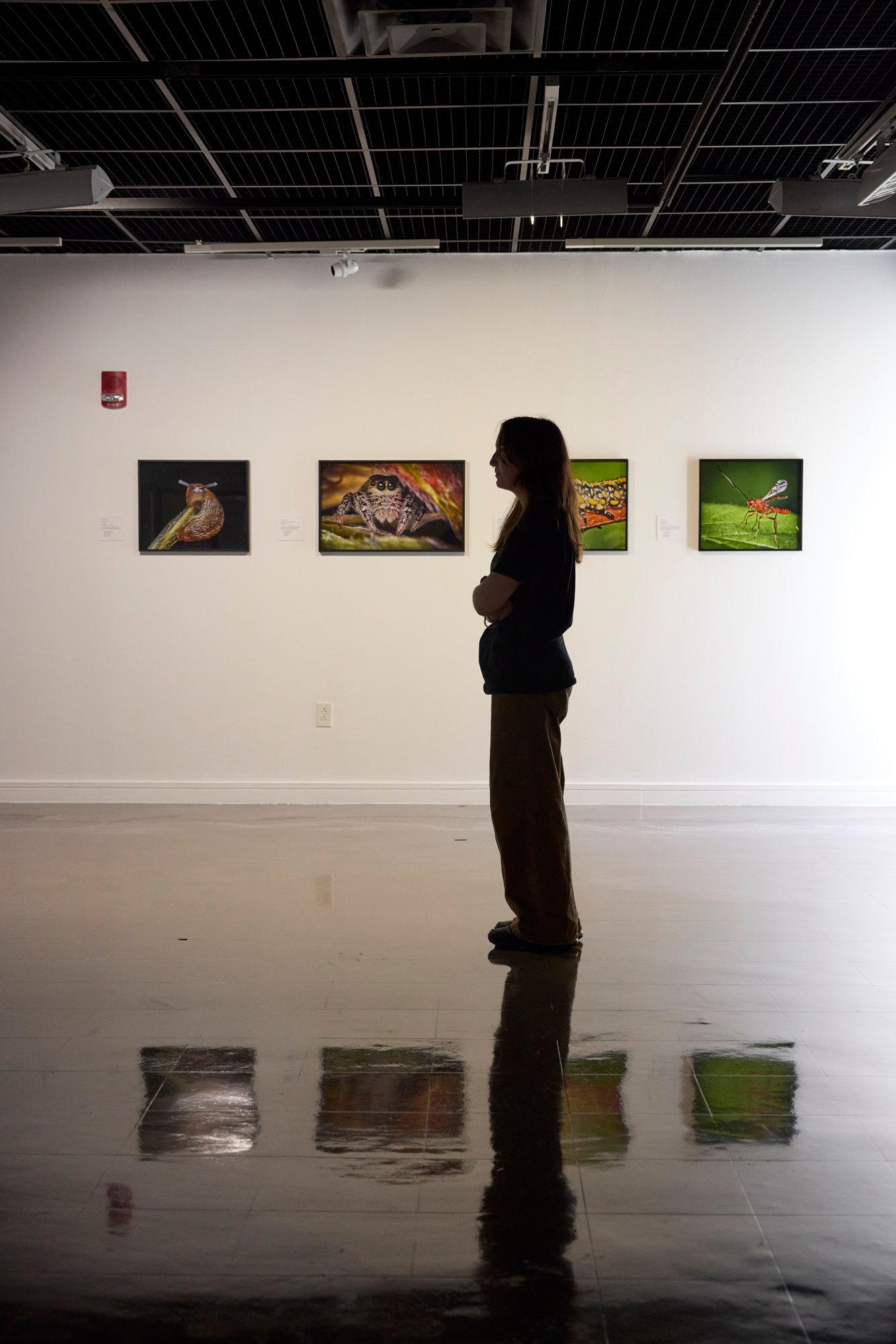
An assignment to analyze the exhibition, Tim McDonald: The Diamond Sea, at the Danforth Art Museum and School, helps students understand how an artist expressed his experience of climate change through a series of shimmering acrylic paintings.
A visit from bio artist Boram (Bo) Kim, rounds out the exploration. As a bio artist, she reinterprets photographic histories and museum archives, reimagining their institutionalized meanings. Kim brought the paintings of octopuses she exhibited in 2023 at the School of the Art Institute of Chicago (SAIC) Galleries.
“People may think that biology and art history are completely different things, but when you look at history and art, there is a lot of biology that goes into it,” says Abbasova. She learned how the peoples of the Maya, Aztec and Moche drew diseases and how to treat them on relief sculptures and ceramics.
“I can take what I learned into medical school,” says Abbasova. “Even if a textbook doesn’t say something, back then somebody could have seen this disease or may have displayed some sort of drawing or art form I could use to treat my patient going forward.”
For Abbasova’s final project, “When Life Does Not Give You Lemons, Make Them Yourself,” she was tasked with choosing a topic and examining how it has been depicted in art over time. Abbasova created a poster that showed the lemon’s hybridization. (A lemon is a manmade double hybrid.) “It went deeper than just drawing something pretty,” says Abbasova. “That surprised me.”
“Students see how arts and humanities skill sets are related to science skill sets,” says Park. “They realize the skills they use to analyze art will also be beneficial to science.”
Abbasova incorporated content from her biochemistry course, such as how collagen ties in, why vitamin C is important and how lemons are used to prevent scurvy. She discovered the reason Royal Navy sailors were called “limeys” (they were given lime juice rations to prevent scurvy). Her partner, Business major Billy Cates ’26, explored how lemons are used on packaging to represent cleanliness and freshness. From there, Abbasova’s passion built, just like Park’s, when she saw the three-dimensional DNA model in Pina’s office.
Before her final presentation, Abbasova hands out goodie bags she made containing a lemon squish ball, a yellow or orange glow stick, Lemonhead candy, lemon pens with yellow tops and lemon stickers.
“I learned so many different aspects of biology and art,” says Abbasova. “I didn’t think art was connected to biology. But as Park taught about art, I started to look at biology through a different lens.”
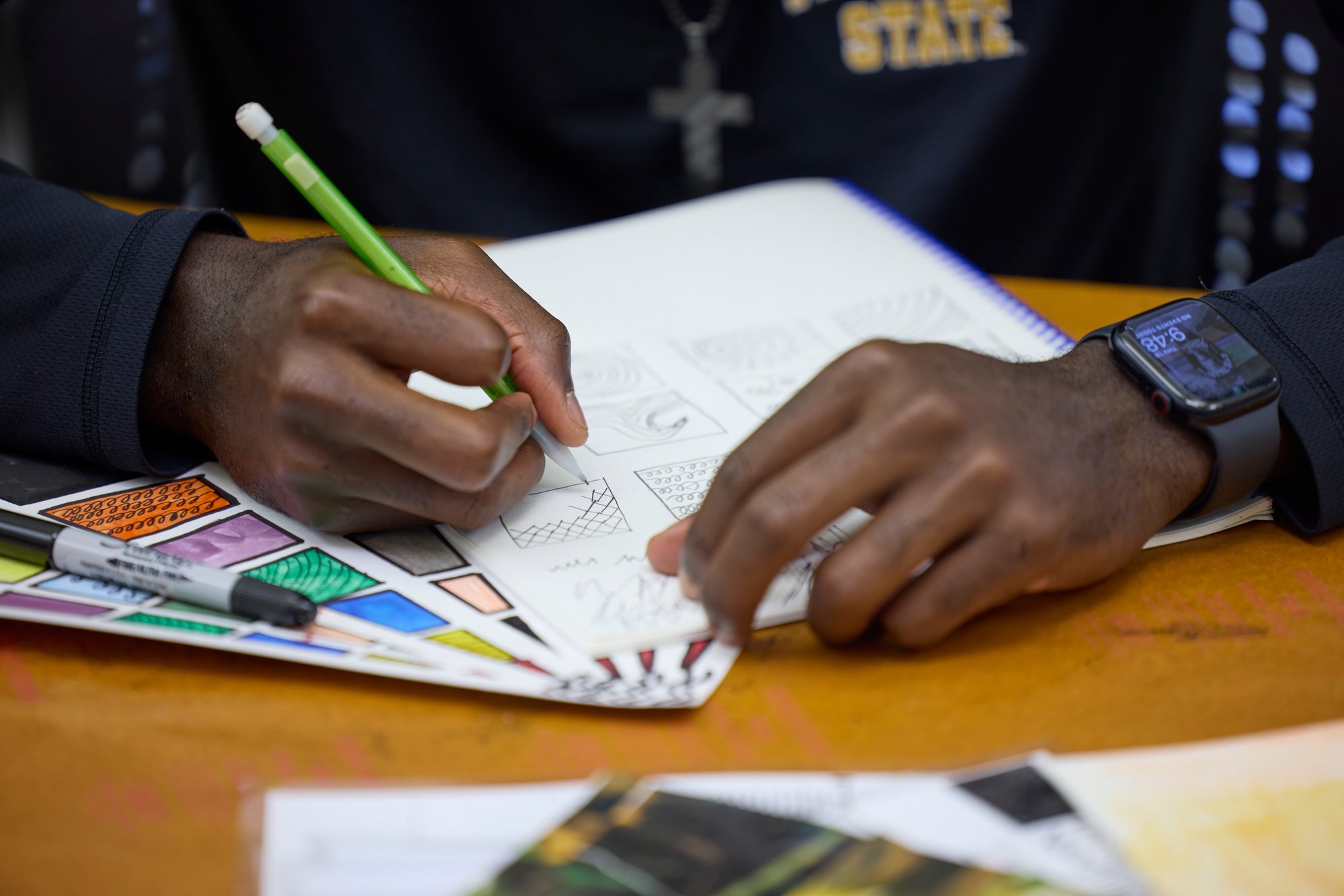
Discussing artwork in the classroom.