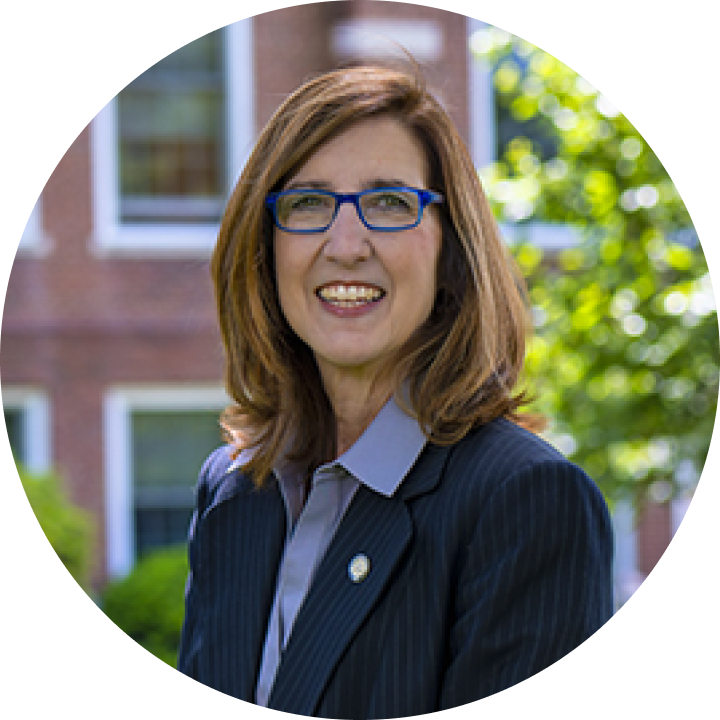
Letter from the President
The MacArthur Fellowship, dubbed the “Genius Grant,” is awarded to individuals whom the MacArthur Foundation deems as “extraordinarily creative” and who, in the foundation’s assessment, demonstrate the ability to impact society in significant ways. These awards are $800,000 investments in people, not projects or institutions, and the nickname surely implies that these awardees are singly the best in their fields: that each person chosen has the genius—the unique capacity—to expand our understanding of art, societal issues, and innovation.
These folks are undoubtedly extraordinary but they are not solitary. Even the most creative and innovative of us live on this planet and, by virtue of being human, we are supported by the social constructs that make it possible for us to eat, to have somewhere to sleep, and to have child or family care. Indeed, even the most solitary achievements are co-created.
We do not like to admit this reality. It’s heady to think about the individual: the scientist alone in her laboratory, concocting miracles; the singer-songwriter’s new release, taking the sales charts by storm; the author’s best-selling book. And most appropriate to FSU: the individual teacher in the classroom, heroically leading her students to exceptional learning, fighting bureaucracy and social inequity with a piece of chalk.
Most of the time, it does take a single person to begin a chapter, create an algorithm, compose the song, teach the student—someone has to start the process of becoming. But no matter what we are doing, we are doing it together with others, and the benefits that come from collaboration are exponentially greater than their individual contributors.
The professors you'll read about in this issue are a perfect example of this alchemy. By co-teaching a class, they learn about the ways in which their disciplines intersect. In so doing, the faculty gains new insights that subsequently help their students, and themselves, see the world in new ways.
This co-creation is at the heart of learning and is what truly differentiates humans from other living creatures. While other species can create new things like tools, it is human beings alone who have evolved to coordinate complex activities. “It is because they are adapted for such cultural activities and not because of their cleverness as individuals,” comparative psychologist Michael Tomasello writes, “that human beings are able to do so many exceptionally complex and impressive things.” In other words, we are hardwired to collaborate, and that collaboration creates the incredibility of humanity.
This is heartening to me, as we in higher education continue to wrestle with the educational rifts in public regard for the value of college, as well as the oceans that seem to separate Americans’ opinions on the future health of U.S. democracy. Being a citizen of a democracy is hard work; if we want free speech and free press, free and fair elections, and equity for all people of our country, we have to want it badly enough to spend each day building it. Those building blocks of democracy are forged in education.
Our own Horace Mann knew that educating students and their teachers was central to good citizenship, democratic participation, and societal well-being. We need to continue to learn how to work together, gaining the benefits of different perspectives, or seeing previously unconsidered connections between ideas. We need to feel the reward that comes with the satisfaction of standing back to look at a world that is a little better today than it was yesterday, and saying, “We did that. Together.”
I hope that this is what we are doing, every day, at Framingham State.
Warmly,
PresidentFramingham State University
— Nancy S. Niemi, PhD